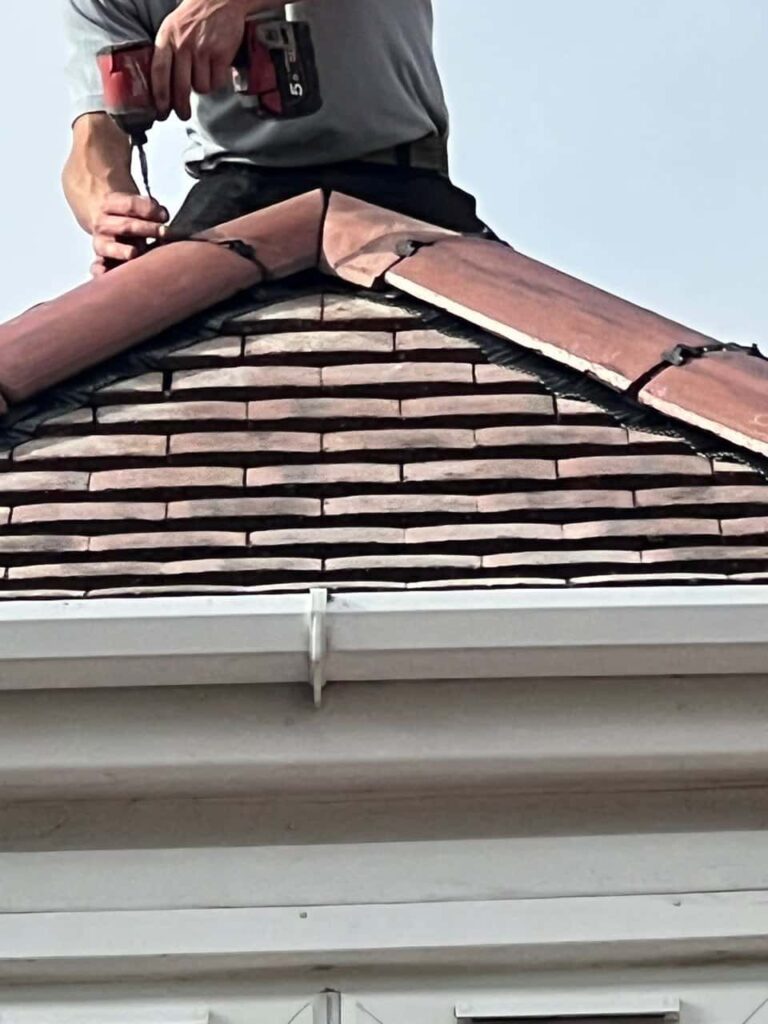
Localised roof repairs are often the correct response to an isolated defect. A slipped tile, small flashing failure or limited area of damaged felt can usually be repaired while the surrounding roof remains sound.
However, repeated patching becomes less effective when deterioration affects several parts of the roofing system. In these circumstances, treating one visible defect may only delay the next problem. Recognising the wider warning signs can help you arrange a thorough assessment and choose a more dependable solution.
When a Localised Roof Repair May No Longer Be Enough
1. Leaks Are Appearing in Different Areas
One recurring damp patch may indicate that the original source has not been fully identified. Leaks appearing in separate rooms, however, can suggest that water is entering through several parts of the roof.
Multiple entry points may involve tiles, flashing, valleys, ridges or deteriorated underlay. Repairing each internal symptom separately will not resolve widespread weakness across the roof covering.
2. Previous Repairs Keep Failing
A repair should integrate securely with the materials surrounding it. If patches repeatedly crack, lift or allow water ingress, the neighbouring roof components may no longer provide a stable base.
The issue may extend beyond workmanship at the repaired point. Ageing tiles, brittle felt, weakened battens or movement across the roof can all undermine otherwise reasonable local repairs.
3. Large Numbers of Tiles Are Damaged
One or two cracked or displaced tiles can normally be replaced. Concern increases when tiles continue to slip, break or deteriorate across several roof slopes.
Widespread tile damage may indicate:
- Failing fixings
- Weak or decaying battens
- Extensive weathering
- Movement within the covering
- Unsuitable earlier repairs
- Deteriorated materials that are difficult to disturb safely
Replacing individual tiles may not offer lasting protection if adjacent coverings are equally fragile.
4. The Underlay Has Deteriorated Widely
Roofing underlay provides secondary protection when moisture passes beneath the outer covering. Over time, older underlay can become brittle, torn or unsupported.
Local patching may be possible when damage is confined to a small area. If the underlay is failing across large sections, water can reach the roof space at numerous points. Accessing it may also require extensive areas of tiles to be lifted, making a broader approach more practical.
5. The Roofline Is Sagging or Uneven
A visible dip, distortion or change in the roofline should be investigated promptly. It may indicate movement within the supporting structure, weakened timbers or prolonged exposure to moisture.
A surface patch cannot correct a structural problem beneath the covering. The affected area must be examined to establish what has moved, why it has happened and whether connected sections have also been affected.
6. Several Roof Components Are Failing Together
A roof functions as a complete system. Tiles, battens, underlay, flashing, ridges, verges and drainage components must work together to direct water away from the property.
If problems are developing across several of these elements, repairing only the most obvious defect may provide limited benefit. Examples include loose ridge tiles combined with cracked mortar, failing flashing and deteriorated underlay.
When faults overlap, a coordinated programme of work may provide a more consistent result than a series of unrelated patches.
7. The Roof Has Become an Inconsistent Patchwork
Repeated repairs can leave sections of different materials, ages and conditions across the same roof. Each patch may have addressed a genuine problem, but the overall covering can eventually become difficult to maintain reliably.
Junctions between old and repaired areas may become vulnerable, particularly where surrounding materials continue to deteriorate. If new faults regularly appear beside earlier work, it is sensible to assess the entire roof rather than adding another isolated patch.
What Should a Professional Roof Assessment Include?
A useful assessment should identify the source, extent and cause of the damage. It should consider more than the area where water has become visible indoors, as moisture can travel along underlay, battens and timbers before appearing.
The inspection should examine:
- The condition and security of tiles
- Ridges, verges and valleys
- Leadwork and other flashing
- Underlay and battens where accessible
- Signs of moisture within the roof space
- The alignment of the roof structure
- Earlier repairs and adjoining materials
- Gutters and roof drainage
This complete view helps determine whether targeted repair, wider refurbishment or roof replacement is the most appropriate response.
Repair or Replace?
A roof does not automatically require replacement because it is old or has needed previous attention. Localised repairs can remain suitable when the damage is clearly defined and the surrounding materials are serviceable.
Replacement may deserve consideration when defects are widespread, hidden components have deteriorated or new problems continue to emerge in different places. The decision should be based on the roof’s present condition rather than age alone.
At Chatteris Roofing Repairs, we assess the complete roofing system before recommending any work. This ensures the proposed solution addresses the underlying problem and not simply its most visible symptom.
Conclusion
Repeated leaks, widespread tile damage, failing underlay, structural movement and numerous unsuccessful patches can all indicate that a roof needs more than another localised repair. A thorough inspection can establish whether broader remedial work or replacement would provide a more dependable outcome.
If your roof in Chatteris, Cambridgeshire, continues to develop faults despite earlier repairs, contact Chatteris Roofing Repairs to arrange a professional assessment.
Call us on: 01354 701 289
Click here to find out more about Chatteris Roofing Repairs
Click here to complete our contact form and see how we can help with your roofing needs.